
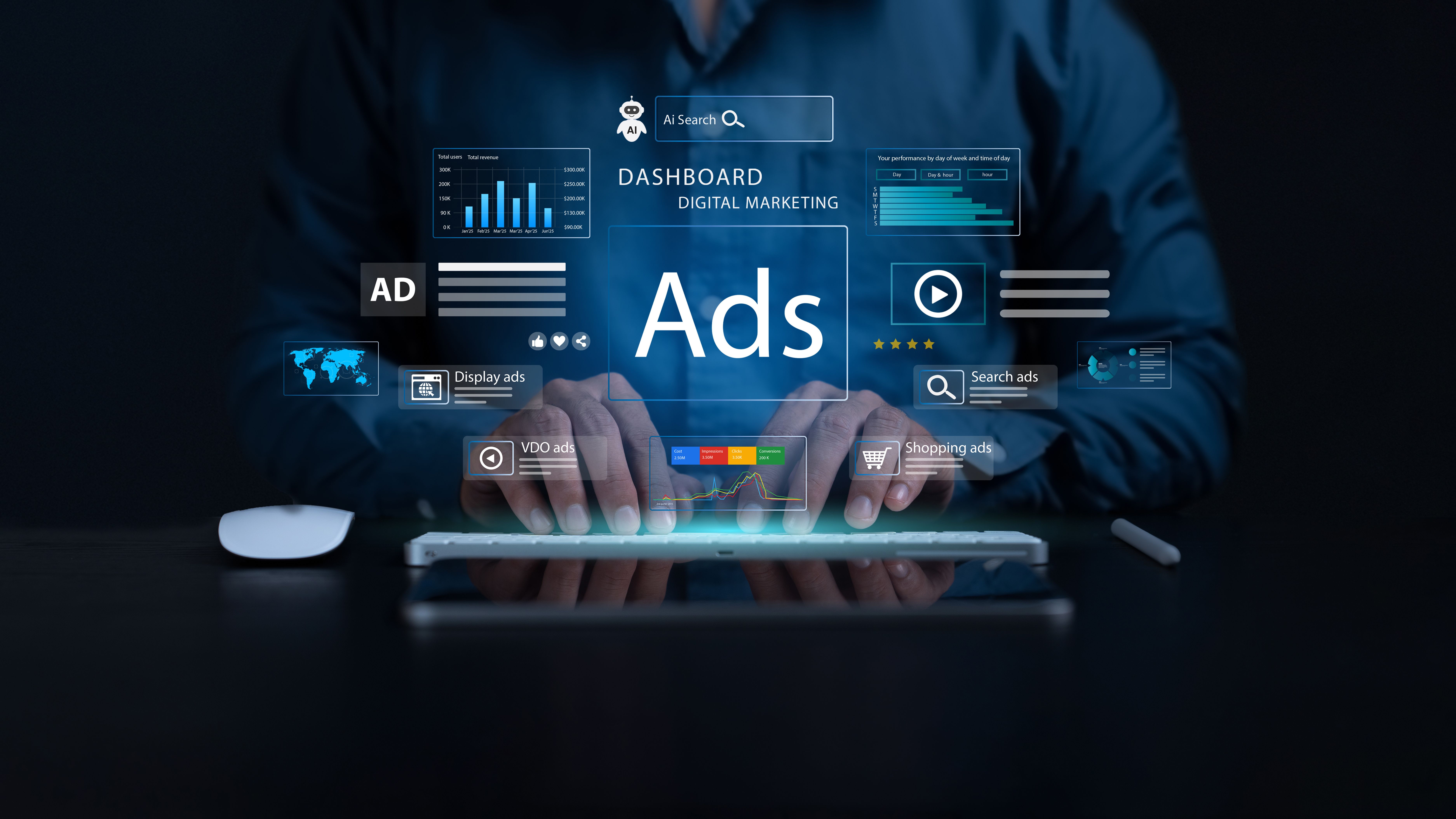
Every month you write the check. Google, Meta, maybe a little on Instagram. The agency sends a report. It says "impressions up, clicks up, CTR improving." And you still have no idea whether the ads are actually bringing in customers.
This is the most common feeling among service business owners who spend between $3,000 and $30,000 a month on advertising. Not anger. Not certainty that it's failing. Just a quiet suspicion that nobody can actually answer the question.
The suspicion is usually correct. Here's why it happens, and how to fix it.
The metric that lies
Ad platforms are built to show you numbers that look like results. Clicks. Impressions. Click-through rate (that's the percentage of people who saw your ad and clicked it). These are easy to measure, so they get measured. They are not the same as customers.
A click is someone touching the door handle. A customer is someone who walked in, sat down, and paid. Most reporting stops at the door handle.
The number that actually matters is cost per customer. How much did you spend to get one paying job? If you spent $4,000 last month and got 8 new customers, your cost per customer was $500. Whether that's good or bad depends entirely on what those customers are worth. A $500 cost per customer is a bargain if the average job is $5,000. It's a disaster if the average job is $400.
Most agencies never get to this number. Not because they're dishonest. Because getting to it requires connecting systems that don't automatically talk to each other.
The gap nobody maps
Here's what the data trail actually looks like. Someone searches for your service. They see your ad. They click it. They land on your website. They call, fill out a form, or book online. Someone on your team talks to them. They become a customer. That last step, from inquiry to paying customer, is where most budgets go to die untracked.
Ad platforms can see the click. They cannot see the sale. Unless you specifically set up a way to tell Google or Meta "this person became a customer and paid us X dollars," the platform has no idea. It will happily optimize your ads toward more clicks, more form fills, or more phone calls, regardless of whether any of those turned into revenue.
This is the gap. The ads system lives on one side. Your CRM (the software where you track customers and jobs), your phone system, and your actual revenue live on the other. Connecting them requires deliberate setup work. Most accounts never have it done.
“Ad platforms optimize for what they can measure. If you haven't told them what a real customer looks like, they're guessing.”
Imagine you hired a salesperson and only told them to make phone calls. Never told them which calls turned into jobs, or which types of customers were actually profitable. They'd make a lot of calls. Some would be good. You'd have no way to know which ones or why. That's exactly what's happening when your ads run without proper tracking.
What the platform is actually doing
Google and Meta have both shifted to automated bidding systems in the last few years. Google calls theirs Performance Max. Meta calls theirs Advantage+. Both do the same basic thing: the platform's AI decides who sees your ad, when, and at what price, based on its best guess of who is likely to convert.
This isn't bad. Done right, it's actually more efficient than manually picking every audience and bid. But the AI is only as good as the goal you give it. If you've told it to optimize for form fills and half your form fills never turn into customers, you've built an expensive machine that finds bad leads.
Think of it like a GPS. The GPS is excellent at getting you where you tell it to go. If you type in the wrong address, it will take you there very efficiently. The platform automation is the GPS. Setting the right destination, which means defining a real conversion that represents an actual customer, is still your job.
A conversion, in ad industry terms, is simply an action you've decided to count as meaningful. A phone call. A form submission. A booked appointment. An online purchase. The question is whether the actions you're counting actually lead to money.
Four questions you should be able to answer
You don't need to become a digital marketing expert. You need to be able to get straight answers to four questions. If your current setup can't answer all four, you don't actually know if your ads are working.
- How many new customers came from ads last month? Not clicks. Not calls. Customers who paid.
- What did it cost to get each one? Total spend divided by number of customers.
- What is the average value of a customer from ads? First job, lifetime, or both. You need a number.
- Which specific ads, audiences, or channels drove those customers? Google? Meta? Which campaign? Which creative?
If you get vague answers, charts that show clicks, or a shrug when you ask about actual customers, that's the problem right there. Not your budget. Not the platform. The measurement infrastructure.
The good news: this is a solvable, not a creative, problem. It requires setting up conversion tracking correctly (connecting what happens on your website back to your ad platform), closing the loop with your CRM or phone system, and having someone who actually looks at the data with judgment, not just a dashboard that refreshes on autopilot.
What good actually looks like
A well-run paid media account for a service business looks something like this. Every call and form fill is tracked and tied back to which ad, which keyword, and which platform generated it. That data flows into a CRM where your team marks which inquiries became customers and at what value. Once a month, the platform's bid settings get adjusted based on which customer types are actually profitable. Creative, meaning the images, videos, and copy in your ads, gets refreshed based on what's working and what's starting to decay.
That last part matters more than most people expect. Ad creative has a shelf life. The best-performing ad you have today will start losing steam around month 3 or 4. Not because the platform changed. Because people have seen it enough times that it stops registering. A system that catches this and replaces creative before it tanks your results is the difference between a spend that compounds and one that quietly bleeds.
Most smaller agencies set up the account and then manage the settings. They're tuning the instrument while the song goes off-key. The creative, the offer, the landing page your ad points to, and the measurement setup are what actually drive results. Bid settings are secondary.
And speaking of landing pages: if your ad sends someone to your homepage, that's usually a problem. Your homepage is written for everyone. A customer who clicked an ad for "emergency plumbing in Phoenix" should land on a page that says "emergency plumbing in Phoenix," not a page that says "Welcome to Smith & Sons Home Services." The site your ad points to is half the campaign. Treating it as an afterthought is one of the most common and most expensive mistakes in paid media.
The bet worth making
Paid ads, done right, are the fastest legal way to put your business in front of someone who is actively looking for what you do and ready to buy. That's still true. Google Ads are still the most direct route between a person searching "roof replacement near me" and your phone ringing.
But the operating assumption that the platform will figure it out, or that the agency report is the same thing as real measurement, is what turns a reasonable budget into a bill you can't justify. The platform's automation is powerful. It needs real signal to work with. Give it noise and it will optimize for noise.
The fix isn't complicated, but it requires someone who has done it before. Setting up conversion tracking that actually captures phone calls, form fills, and booked appointments. Connecting that data to what your business recognizes as a real customer. Feeding the platform enough of the right signal that its automation works for you instead of guessing. And then watching the numbers that matter, cost per customer and return on spend, not the ones that just look impressive in a slide deck.
If you're not sure whether your current setup clears that bar, our Performance Media service is built around exactly this: senior people, real measurement, and paid accounts that connect spend to customers, not just clicks.