
Two things happened this week that most marketing blogs will treat as separate news stories. They are the same story.
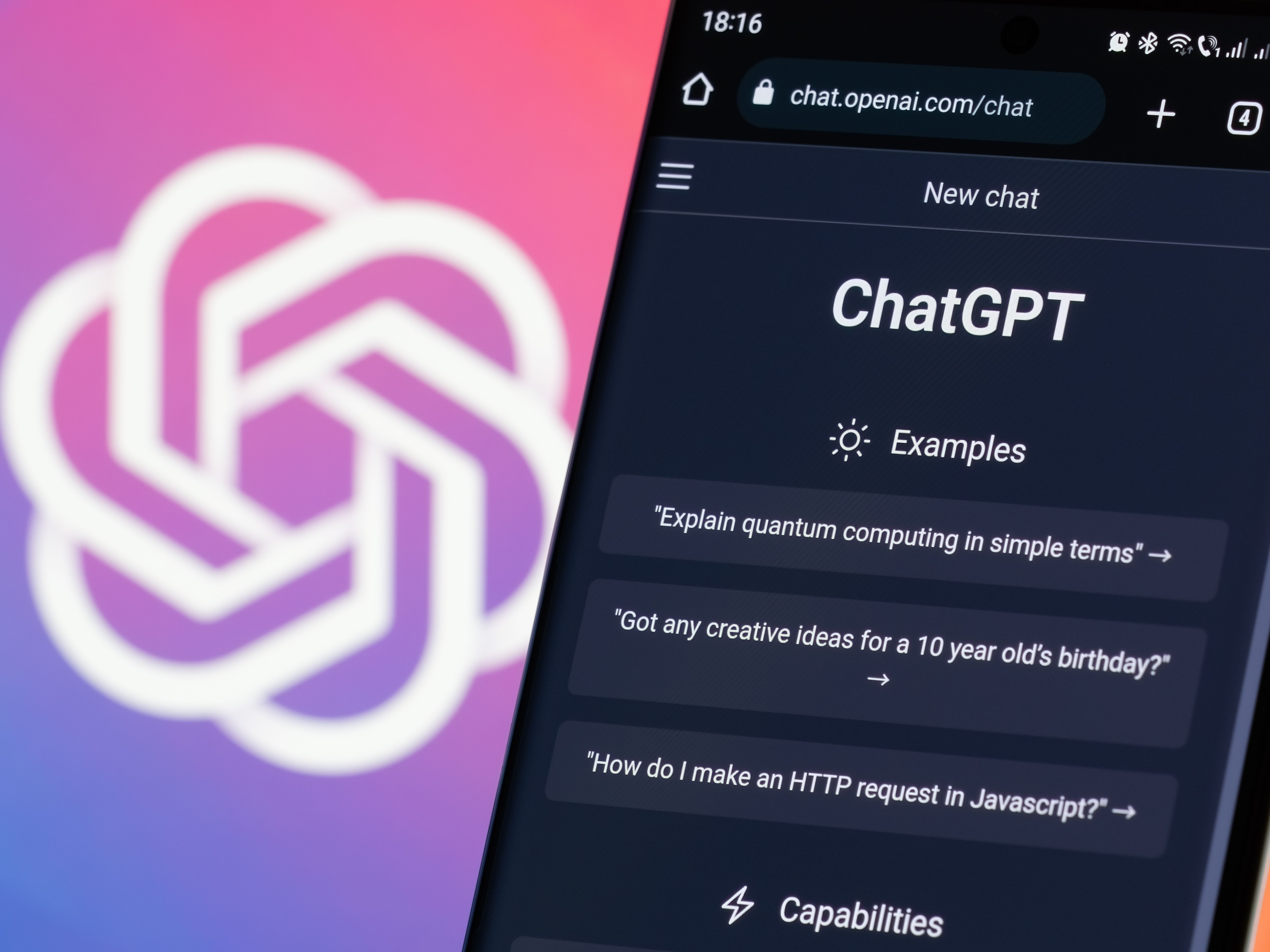
OpenAI opened a self-serve Ads Manager inside ChatGPT. CPC bidding. Conversion tracking. Expanded advertiser access. Meanwhile, Anthropic shipped "Dreaming" to Claude Managed Agents: an asynchronous process that reviews past agent sessions, cleans up memory, and distills new insights between runs. One is a new ad channel. The other is AI infrastructure that gets smarter without you.
Read together, these two moves draw a clear line between operators running AI as a workflow and everyone else running AI as a feature. That line is about to get expensive to be on the wrong side of.
The ChatGPT ad channel
Let's be precise about what OpenAI actually launched. This is not a sponsored answer buried in a sidebar. OpenAI is testing clearly labeled ads, with answer independence maintained (meaning the ad does not dictate the response), user controls, and strong stated privacy protections. The self-serve Ads Manager supports CPC bidding and conversion tracking. That is a real auction. That is not a soft partnership play.
ChatGPT handles over a billion messages a day. A meaningful share of those are purchase-intent queries. A user asking ChatGPT "which HVAC company in Phoenix should I call" or "best accounting software for a 20-person firm" is closer to a Google search than a social scroll. The CPC model is designed to capture exactly that moment.
For context: Google's first-page organic result captures roughly 28% CTR. ChatGPT's answer, when your brand is the cited source, captures something closer to 100% of the user's next action. That asymmetry is why this channel matters, even in beta.
What this does to paid media
The reflexive take is: new ad channel, go allocate 10% of budget, test it, report back. That is the wrong frame.
The correct frame is: paid media is now running on two structurally different auction types simultaneously. Google's Performance Max and Meta's Advantage+ operate on behavioral signals and creative variation. ChatGPT ads operate closer to keyword intent in a conversational wrapper. The creative requirements are different. The measurement infrastructure is different. The audience context is different.
Agencies that are already running AI ad ops workflows are positioned to test this channel fast. Agencies that are not will spend the first six months just building the reporting layer. That is not a small gap.
Think of it this way. Google Search ads are McDonald's: massive volume, highly systematized, price-competitive, optimized for reach. ChatGPT ads, at least in this first iteration, are closer to In-N-Out: smaller footprint, higher intent, more specific engagement. You don't run them the same way and you don't measure them the same way.
Claude's Dreaming is the bigger deal
“An agent that reviews its own mistakes and gets smarter between runs is not a tool. It's infrastructure.”
The ChatGPT ad announcement is loud. The Claude Dreaming announcement is quiet. Quiet is usually where the durable story lives.
Here is what Dreaming actually does. Claude Managed Agents, after completing a session, run an asynchronous review process. They identify duplicate or outdated memory entries, clean them out, and distill new insights from what happened. The agent is literally reviewing its own work and getting smarter before the next run. Anthropic has also shipped Outcomes and Multiagent Orchestration to public beta alongside this.
This is not a memory management feature. This is compound learning built into the infrastructure layer. An agent managing your content calendar, your reporting workflow, or your SEO brief generation is now capable of improving its own output over time without you manually correcting it every cycle.
For operators who want to understand what Claude is actually capable of as infrastructure, that context matters. The What Is Claude page covers this, but the Dreaming announcement shifts the frame from "useful tool" to "self-improving system." Those are different categories.
Bolt-on AI is the Garmin suction-cupped to your windshield. It gives you directions. Operator AI with Dreaming is the navigation system Tesla rebuilds every time you park, learning your routes, your preferences, your patterns. Same destination. Structurally different capability.
The operator gap is widening
Most agencies have an AI slide in their deck now. Bid recommendations from the platform. A creative tool that outputs ad copy variants. Useful, cosmetic, and functionally identical to what competitors are running. The workflow is the same 2018 workflow with a new label on it.
The gap between that approach and true operator AI is not closing. It is accelerating. Claude agents that improve between sessions and ChatGPT ads that require conversational creative strategy are not problems you solve by adding a subscription to your stack. They require a different architecture.
The service businesses watching this that should act are the ones already spending real money on paid search. If you're running $15K or more per month in Google Ads and your agency's AI story is "we use Smart Bidding," this week's news is a signal. A new intent-capture channel is opening, and the operators who have their AI infrastructure right will move faster, test smarter, and iterate without burning a $5K/mo retainer on setup work.
- ChatGPT Ads Manager is live in beta with CPC bidding and conversion tracking. Real auction. Real intent.
- Claude Dreaming enables agents to review past sessions asynchronously and improve memory and output over time.
- Multiagent Orchestration is now in public beta, meaning you can run multiple Claude agents coordinating on complex workflows.
- Anthropic's compute is scaling fast: 220,000 NVIDIA GPUs coming online through SpaceX's Colossus-1 data center. Rate limits are going up. Capacity is not the constraint for long.
- The creative and measurement requirements for ChatGPT ads are different enough from Search and Social that existing playbooks need to be rebuilt, not reused.
What to do right now
For Friday, here is the honest, un-hedged answer on what actually matters for a service business in the $2M to $50M range.
Do not rush budget into ChatGPT ads yet. The channel is real. The auction is real. The measurement infrastructure is still maturing. Wait for the beta to stabilize, watch the CPCs, and build your creative approach before you build your budget. The operators who win on a new channel are not the first to spend. They're the first to spend with a system.
Do take Claude's Dreaming announcement seriously as an infrastructure signal. If your marketing operation runs any AI agents, whether for content, reporting, SEO briefs, or ad copy, the question is now whether those agents improve between cycles or reset to zero. Resetting to zero is a real cost. It just doesn't show up on an invoice.
The Build Your Own AI System work we do for operators is specifically about this: installing a stack that compounds, not a stack that performs once and plateaus. Dreaming is exactly the kind of capability that separates those two outcomes.
Where this lands
The week of May 5 to 7, 2026 will probably show up in a marketing retrospective somewhere as the week AI advertising became structural. Not theoretical. Not experimental. Structural.
Two of the most important AI companies in the world just made moves that reward operators and punish passengers. If your current AI posture is "we use the tools," that is no longer a neutral position. It is a lag.
If you're not sure which side of that line your operation sits on, the DIY or Agency Quiz is a good five-minute check. It won't give you a sales pitch. It will give you an honest read on whether you need a different partner or a better internal system.